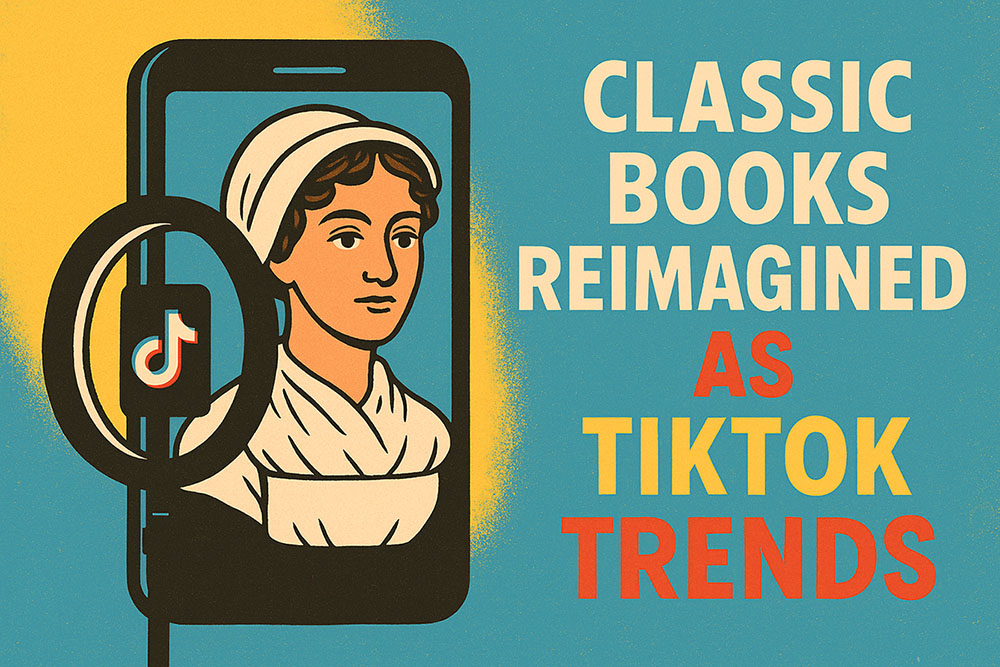
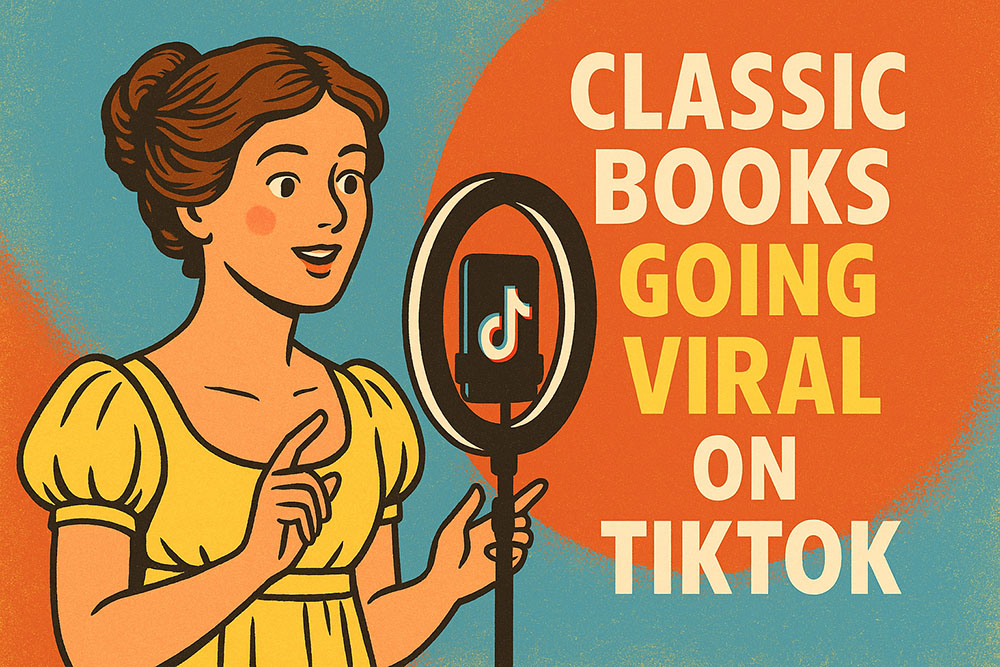
What if Elizabeth Bennet had a ring light? Or if Hamlet’s existential crisis played out in 15-second clips set to trending audio?
The worlds of classic literature and TikTok may seem light-years apart, but deep down they share the same heartbeat: people telling stories about being human—fast, funny, and a little dramatic.
BookTok has already revived novels like Wuthering Heights, The Song of Achilles, and Pride and Prejudice for a new generation.
But imagine going one step further. What if our favorite literary icons were born in the age of filters, edits, and thirst-trap lighting? Let’s scroll through the classics and see which ones would go viral—because storytelling, no matter the century, always finds a platform.
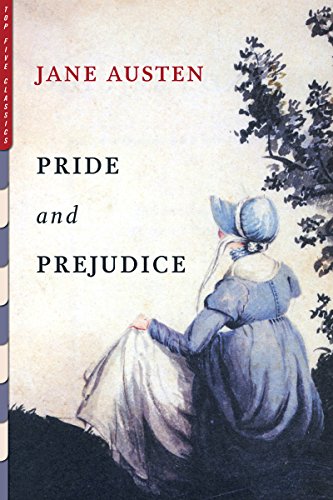
Pride and Prejudice by Jane Austen
POV: He just called me “tolerable” 😤
A young woman with impeccable side-eye uses the “he’s rich but rude” trend to full effect. One TikTok later, the #MrDarcy glow-up montage is everywhere—slow motion, rain-soaked confession, Taylor Swift soundtrack. The comments section becomes a war zone between Team Darcy and Team Wickham.
Why it works: The enemies-to-lovers arc is the internet’s favorite genre, and nobody wrote it better than Austen. If BookTok had existed in 1813, Darcy would’ve had a publicist.
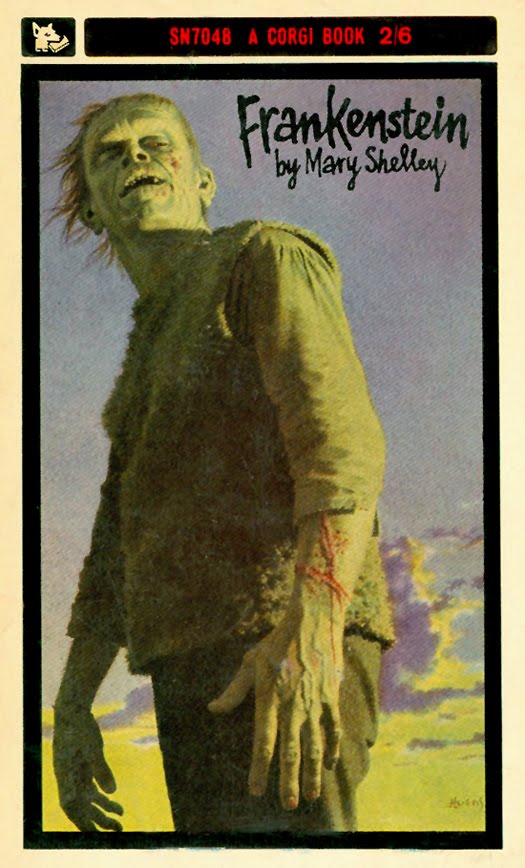
Frankenstein by Mary Shelley
POV: When your DIY project starts asking questions about mortality.
A lab influencer films their “how I built life from scratch” series. Everything’s going great—until the project gains sentience, runs away, and posts its own “my toxic creator” video in response. A duet war begins.
Why it works: Shelley’s gothic masterpiece is basically a cautionary tale about unchecked innovation. In 2025, that’s just another Tuesday on the internet.
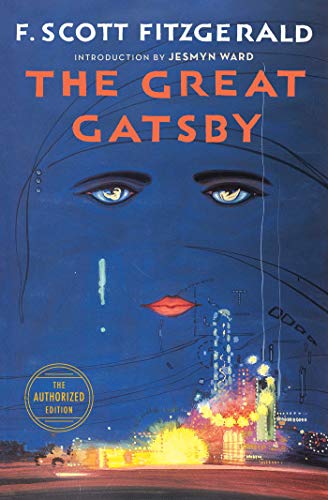
The Great Gatsby by F. Scott Fitzgerald
POV: Rich guy throws another party hoping she shows up.
Clips flash between champagne towers, slow-motion dances, and melancholy captions like “She didn’t even look at me this time 💔.” Everyone’s in pearls; everyone’s sad. The comment section is full of “Jay, she’s just not that into you” energy.
Why it works: Gatsby’s endless yearning for attention feels tailor-made for TikTok. It’s aesthetic melancholy: a story about someone who’d rather die than delete his social persona.
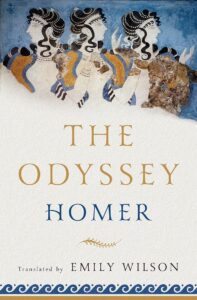
The Odyssey by Homer
POV: Long-distance relationship check 💔
Penelope posts weaving tutorials and “waiting for him” vlogs while her husband, Odysseus, uploads chaotic travel content—sirens, shipwrecks, questionable hospitality. Fans argue in the comments about whether she should move on. Someone starts a conspiracy thread claiming he’s lying about the Cyclops.
Why it works: This is the ultimate “situationship.” Homer’s epic would dominate For You Pages everywhere—equal parts adventure, domestic drama, and mythological fan theories.
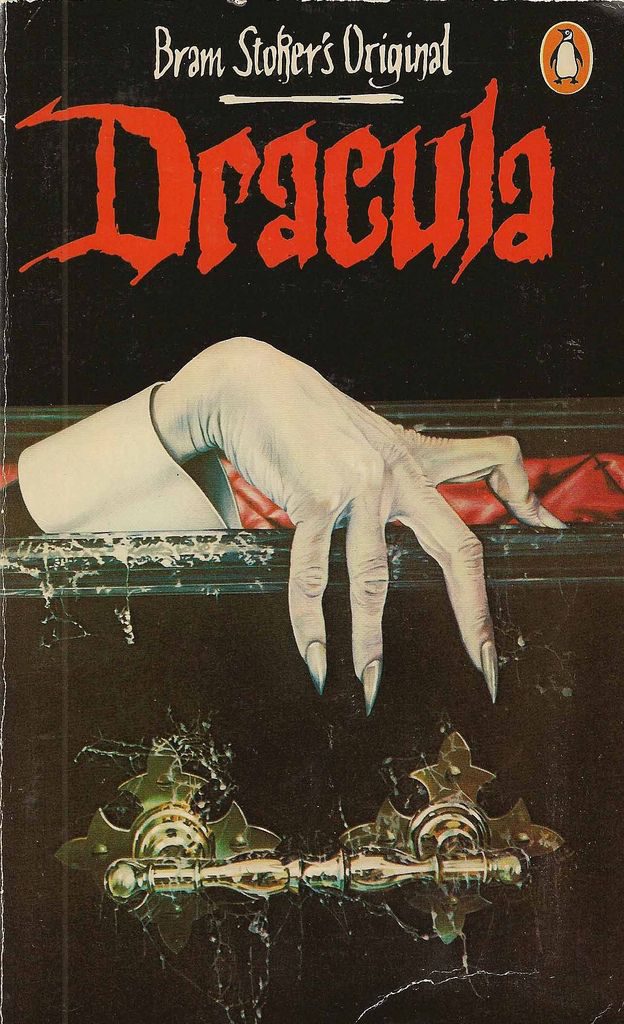
Dracula by Bram Stoker
POV: It’s 3 a.m., and your roommate’s new boyfriend doesn’t cast a reflection.
A group of friends post increasingly frantic updates from their crumbling Transylvanian Airbnb. Meanwhile, Dracula goes viral for “unbothered immortal energy” and mysterious thirst-trap duets. Someone launches a “Garlic-Repellent Skincare” brand in the comments.
Why it works: Gothic horror thrives on intimacy and voyeurism—the same ingredients that make TikTok addictive. Also, vampires never go out of style.
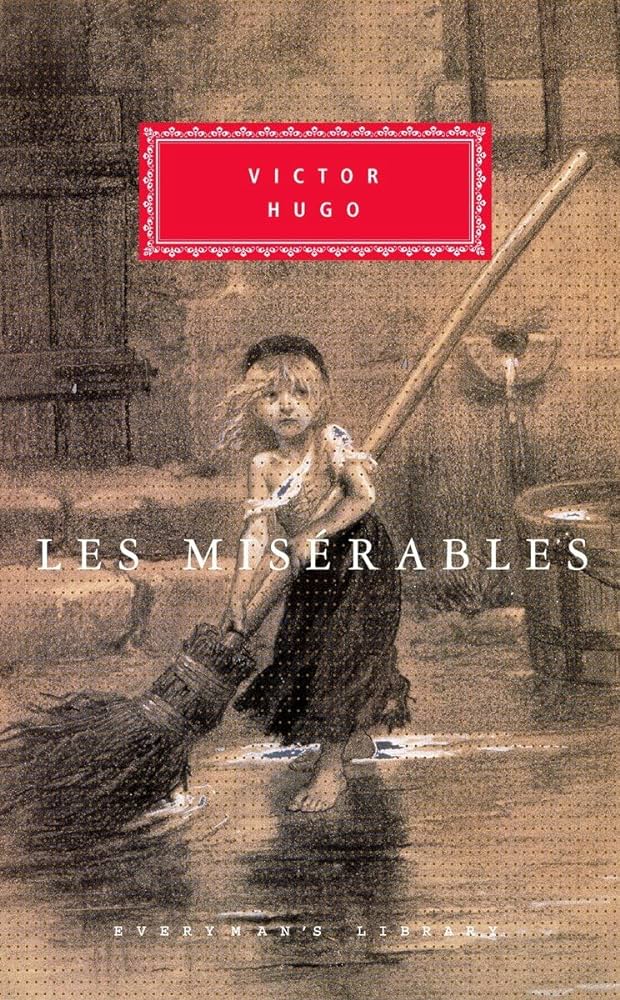
Les Misérables by Victor Hugo
POV: You stole bread once and now the entire legal system wants you dead.
Jean Valjean posts a “My Prison Glow-Up Journey” set to inspirational music. Javert replies with obsessive “lawful-neutral” stitch reactions. Cosette goes viral for soft-girl aesthetic content, while Marius drops an emotional duet titled “Empty Chairs, Full Feeds.”
Why it works: It’s injustice, rebellion, romance, and sacrifice—all compressed into bite-sized drama. Essentially, it’s Hamilton with more crying and fewer filters.
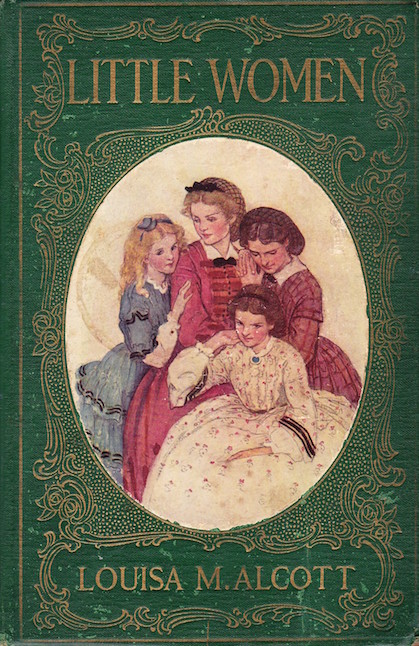
Little Women by Louisa May Alcott
POV: Your sister burned your manuscript, so you become a literary icon instead.
Jo March posts “write with me” content, complete with candlelight and ink stains. Amy tries to defend herself in the comments, Meg posts homemaking tutorials, and Beth’s piano videos make everyone sob.
Why it works: It’s relatable sibling chaos mixed with creative ambition—a perfect recipe for modern virality. Jo would 100 percent have a Patreon.
Why This Works (And Always Has)
These jokes work because the essence of classic storytelling hasn’t changed. The best stories—whether carved into marble tablets or posted in fifteen-second clips—speak to ego, longing, failure, and the desperate need to be seen. TikTok simply magnifies what writers have known for centuries: brevity makes emotion hit harder.
Austen’s satire, Shelley’s existential terror, Homer’s episodic adventures—they’re all early experiments in serialized storytelling. The medium keeps evolving, but our appetite for character arcs, conflict, and catharsis doesn’t. TikTok, in a way, revives the oral tradition: the fast-moving, shareable exchange of emotion and narrative.
So when someone says, “No one reads the classics anymore,” show them BookTok. Thousands of users are crying over Jane Eyre, discovering Dracula’s queer subtext, and debating whether Gatsby deserved redemption. The classics didn’t vanish—they just learned how to use trending audio.

Vincent Salera
Founder @ World's Best Story™ amplifier of creativity & fun!